Monday, 28 March 2016
Weekly status of tyre garden - update 29
Slowly pruning out the dead stuff.
Contender bush beans flowering. Time to plant another batch?
Sweet potatoes...
Sunday, 20 March 2016
Weekly status of tyre garden - update 28
Lots of rain early in the week, mild weather after that. Autumn is definitely here.
Overview - a lot of stuff has been ripped out because it finished producing. A few zucchini still coming along.
Contender bush beans are starting to bud. I'll plant another lot as soon as these start producing beans.
Globe artichokes regrowing from crowns.
At last - seeds of FC UC172 asparagus have sprouted.
More asparagus... last count there were 18 new miniature plants. Let's see how they do.
Overview - a lot of stuff has been ripped out because it finished producing. A few zucchini still coming along.
Contender bush beans are starting to bud. I'll plant another lot as soon as these start producing beans.
Globe artichokes regrowing from crowns.
At last - seeds of FC UC172 asparagus have sprouted.
More asparagus... last count there were 18 new miniature plants. Let's see how they do.
Sunday, 13 March 2016
Weekly status of tyre garden - update 27
Lots of rain the past few days, and quite cool in the evenings.
Contender bush beans nearly flowering.
Globe artichoke crowns regrowing.
Strawberries - now up to 16 tyres of them.
Jerusalem artichokes.
White guavas.
Nu Mex Big Jim peppers.
Piquant peppers - Pepperdew.
Sweet potatoes.
More Jerusalem artichokes.
Pepperdews en masse.
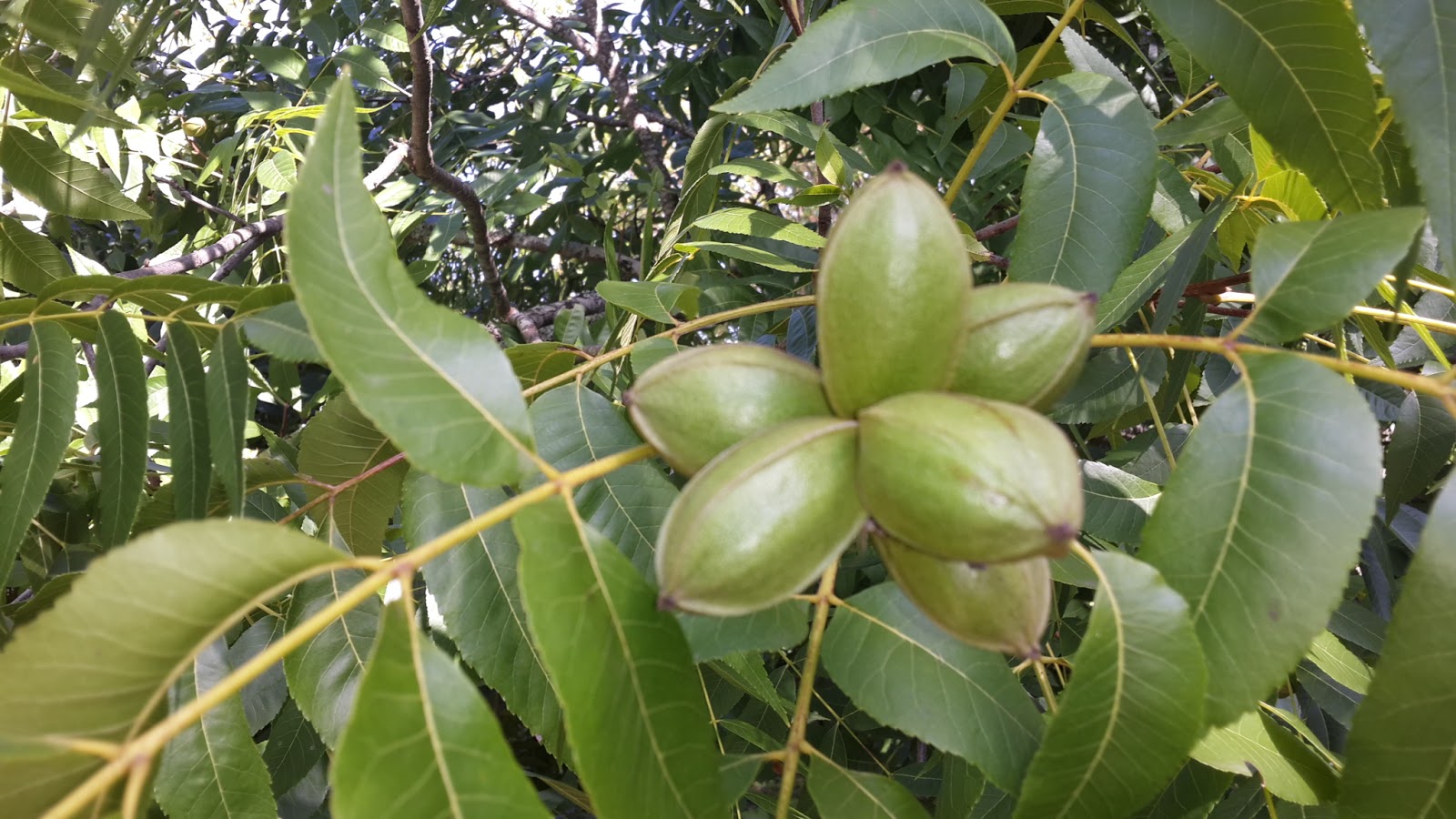
Pecans, getting ready for early April harvest.
Grape vines and strawberries.
Contender bush beans nearly flowering.
Globe artichoke crowns regrowing.
Strawberries - now up to 16 tyres of them.
Jerusalem artichokes.
White guavas.
Nu Mex Big Jim peppers.
Piquant peppers - Pepperdew.
Sweet potatoes.
More Jerusalem artichokes.
Pepperdews en masse.
Pecans, getting ready for early April harvest.
Grape vines and strawberries.
Monday, 7 March 2016
Thysanoptera damage to green peppers?
Most of my green pepper and chilli plants are showing signs of thrips damage - the new growth and flower buds are wrinkled and unhealthy looking, even though the rest of the plant looks OK. Any fruit that sets from the buds is misshape, with scars. This damage is probably due to thrips, but I'm not sure... and have no real idea what to do about it. Looking at Google images, there is only a partial match - there isn't any leaf "spotting" associated with the crinkling.
I thought I'd got away with no garden pests this season, as there were zero aphids to be seen the whole growing period. A few slugs in the early days, but they diminished over time.
Maybe all associated with growing tomatoes nearby? A virus?
Update 2016/04/27:
The C.F. Jacot-Guillarmod Thysanoptera collection. Boxes of microscope slides with the thrips mounted under cover slips in canada balsam.
The catalogue - these are mounted cuttings of journal/newspaper articles/snippets on A4 sheets in 3 ring binders. My dad had a formidable correspondence with entomologists from all over the world and exchanged articles with them. It mirrors the sort of thing he did with articles on Basutoland/Lesotho, which are in the Cory Library.
Thanks to John Midgley, the entomologist at the Albany Museum for showing me around. The top floor of the John Hewitt wing has changed since I was a youngster visiting my dad. Gone is the evocative smell of Ethyl Acetate, mothballs and Xylene. Closure of a sort, I suppose.
I thought I'd got away with no garden pests this season, as there were zero aphids to be seen the whole growing period. A few slugs in the early days, but they diminished over time.
Maybe all associated with growing tomatoes nearby? A virus?
Update 2016/04/27:
The C.F. Jacot-Guillarmod Thysanoptera collection. Boxes of microscope slides with the thrips mounted under cover slips in canada balsam.
The catalogue - these are mounted cuttings of journal/newspaper articles/snippets on A4 sheets in 3 ring binders. My dad had a formidable correspondence with entomologists from all over the world and exchanged articles with them. It mirrors the sort of thing he did with articles on Basutoland/Lesotho, which are in the Cory Library.
Thanks to John Midgley, the entomologist at the Albany Museum for showing me around. The top floor of the John Hewitt wing has changed since I was a youngster visiting my dad. Gone is the evocative smell of Ethyl Acetate, mothballs and Xylene. Closure of a sort, I suppose.
Sunday, 6 March 2016
Weekly status of tyre garden - update 26
Scorcher of a day yesterday - 40c with not a breath of wind. Inside the house was cool, but going outside was like walking into an oven. Fortunately no humidity. Had to water the veggies at mid day.
6 months since starting this blog...
Overview - nothing special going on - most things in a sort of steady state.
Some of the strawberries in the foreground, bush beans - Contender - in the background.
White guavas getting bigger. They take quite a while to ripen, though.
Jerusalem artichoke flowering, which means it's getting close to dieback. The problem with this particular clump is that it's doing too well in a constrained space, so there will be overcrowding.
Orange sweet potato, creepering like crazy.
Autumn raspberry, escaped from its tyre. There's another, larger, escapee on the other side. This should make it easy to propagate. When?
Mary Washington Bed 2.
Mary Washington closeup. I need some sort of scale in there, like a matchbox. Although, I suppose, the 6mm black PVC pipe acts as one...
Mary Washington bed 1.
Patty pan II.
6 months since starting this blog...
Overview - nothing special going on - most things in a sort of steady state.
Some of the strawberries in the foreground, bush beans - Contender - in the background.
White guavas getting bigger. They take quite a while to ripen, though.
Orange sweet potato, creepering like crazy.
Autumn raspberry, escaped from its tyre. There's another, larger, escapee on the other side. This should make it easy to propagate. When?
Mary Washington Bed 2.
Mary Washington closeup. I need some sort of scale in there, like a matchbox. Although, I suppose, the 6mm black PVC pipe acts as one...
Mary Washington bed 1.
Patty pan II.
Monday, 29 February 2016
Butternut
Not deliberately planted:
Tried some last year, but not quite in this area. They failed then after one squash, but look more promising this year now that I'm not trying.
The vine looks healthy apart from a few mildew patches. Hope it doesn't mess with my asparaguses.
Tried some last year, but not quite in this area. They failed then after one squash, but look more promising this year now that I'm not trying.
The vine looks healthy apart from a few mildew patches. Hope it doesn't mess with my asparaguses.
Giant caterpillars - African Emperor Moth - Bunaea alcinoe.
This is the first one I spotted, on the side of the sweet potato enclosure. The plant is what I know as potato weed, and seemed uneaten. The caterpillar is about 8-10cm long and a handsome matte black.
Returning from town about an hour later I spotted this guy, marching determinedly up our driveway from the wall facing the street. One of our cats was interested, but kept her distance.
20 minutes later, another, just as determinedly marching up the driveway, heading towards the compost heap and week old pile of leaves - I tracked these two for about 20 metres going to pretty much the same place. I don't know where the first one went, but there was no direct route for it to the compost heap.
Presumably decomposing vegetation produces carbon dioxide, which, being heavier than air, would drift down hill and thereby attract attentive caterpillars to its source?
There may have been more caterpillars, but I had other things to do. Couldn't work out what they had been eating in the vicinity of my Pecan nut trees (unharmed) and Cape honeysuckle hedge. Although there's lots of leaf litter in the hedge.
According to Google, these are apparently caterpillars of Bunaea alcinoe. I've seen these moths before in the garden, but can't remember what time of the year. They're big, and striking.
Update 2016/10/15:
Sorting out mulch around the edges of the garden, and digging it in to one of the asparagus beds revealed a few of these guys:
Presumably pupae of the above. They look almost as if they're injection moulded plastic, and aren't that heavy/dense. The spike on the end is quite sharp. Is it used by the pupa to burrow?
That's 7 months from caterpillar to this stage. Let's see if I can spot the moths when they come out.
Giant caterpillars - African Emperor Moth - Bunaea alcinoe.
This is the first one I spotted, on the side of the sweet potato enclosure. The plant is what I know as potato weed, and seemed uneaten. The caterpillar is about 8-10cm long and a handsome matte black.
Returning from town about an hour later I spotted this guy, marching determinedly up our driveway from the wall facing the street. One of our cats was interested, but kept her distance.
20 minutes later, another, just as determinedly marching up the driveway, heading towards the compost heap and week old pile of leaves - I tracked these two for about 20 metres going to pretty much the same place. I don't know where the first one went, but there was no direct route for it to the compost heap.
Presumably decomposing vegetation produces carbon dioxide, which, being heavier than air, would drift down hill and thereby attract attentive caterpillars to its source?
There may have been more caterpillars, but I had other things to do. Couldn't work out what they had been eating in the vicinity of my Pecan nut trees (unharmed) and Cape honeysuckle hedge. Although there's lots of leaf litter in the hedge.
According to Google, these are apparently caterpillars of Bunaea alcinoe. I've seen these moths before in the garden, but can't remember what time of the year. They're big, and striking.
Update 2016/10/15:
Sorting out mulch around the edges of the garden, and digging it in to one of the asparagus beds revealed a few of these guys:
One quite deep in the sandy mulch covered soil of the asparagus bed, the other lying on the surface at the margin of our upper hedge.
Presumably larvae of the above caterpillars? They look almost as if they're injection moulded plastic - not that heavy/dense. The spike on the end is quite sharp. Is it used by the larva to burrow?
That's 7 months. Let's see if I can spot the moths when they come out.
Sunday, 28 February 2016
Weekly status of tyre garden - update 25
Rain this week, quite heavy,and light hail. It's definitely moving towards autumn - quite cold last night, and heavy dew this morning.
Took the opportunity to do some clearing - 4 out of 6 tomatoes, patty pans, some kale, some weird plant from the neighbour shading the asparagus, bouganvillea, oreganum. Onto the compost...
Autumn raspberries - unexpectedly!
Piquant peppers.
Sweet potatoes.
Hanepoot grapevine. Need to work out how to control the grass.
Two beds of Mary Washington asparagus seedlings - vary from flourishing to hanging in there. In the background along the fence is a butternut.
Two lots of jerusalem artichokes, doing fine.
The two surviving Zucchini plants, escaped from their tyre, and still producing well.
Nu Mex Big Jim - still green. Not as hot as I expected.
Subscribe to:
Posts (Atom)